 Tekir
Turkish Van vs Turkish Angora: what's the difference?
Last updated: 2026-10-12
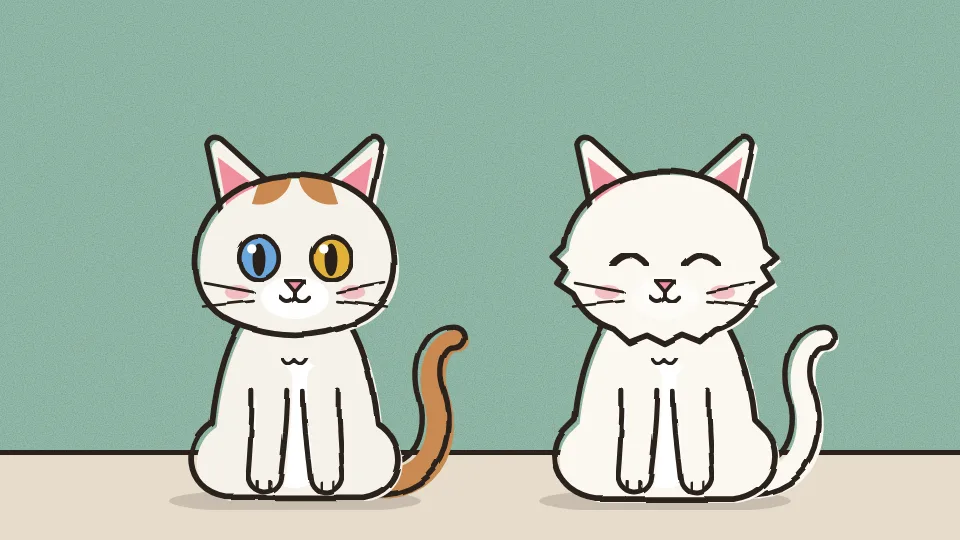
Short answer: The Turkish Van and the Turkish Angora are two different breeds. The Van comes from the Lake Van region; it is sturdy, muscular and broad-chested, with a semi-long coat and colour usually only on the head and tail. The Angora is long and slender with a single silky coat and today comes in many colours besides white. Odd eyes can appear in both.
Turkish Van
- Origin: the Lake Van area.
- Body: sturdy, broad and muscular; matures slowly.
- Coat: semi-long, cashmere-soft, no undercoat; shorter in summer.
- The "Van pattern": white body, colour on the head and tail.
- Eyes: amber, blue or odd-eyed.
- Known for its affinity to water.
In Türkiye many people picture an all-white, odd-eyed cat when they hear "Van cat", while the international breed standard defines the Van pattern by colour on the head and tail.
Turkish Angora
- Origin: Türkiye; preservation breeding programmes were set up at zoos in the 1930s.
- Body: small to medium, long and slender; hind legs longer than front legs.
- Coat: single, silky, medium length, not prone to matting.
- Colour: white was once considered the only authentic colour; today many colours.
- Eyes: blue, green, green-gold, amber or odd-eyed.
At a glance
| Turkish Van | Turkish Angora | |
|---|---|---|
| Body | Large, muscular | Slender, long |
| Coat | Semi-long, cashmere-like | Single, silky |
| Colour | On head and tail | Many colours |
Both are in Tekir
In Tekir you can adopt a Turkish Van (one blue eye, one amber) and a fluffy white Turkish Angora.
FAQ
Do Turkish Vans swim?
The breed standard mentions their affinity to water, and some founding breeders describe kittens swimming voluntarily.
Are Turkish Angoras always white?
No. White was once considered the only authentic colour; today many colours are recognised.
Sources
This article is general information, not veterinary advice. Talk to a vet about decisions on your cat's health.